Best Practices for Controlling Dust at Conveyor Transfer Points
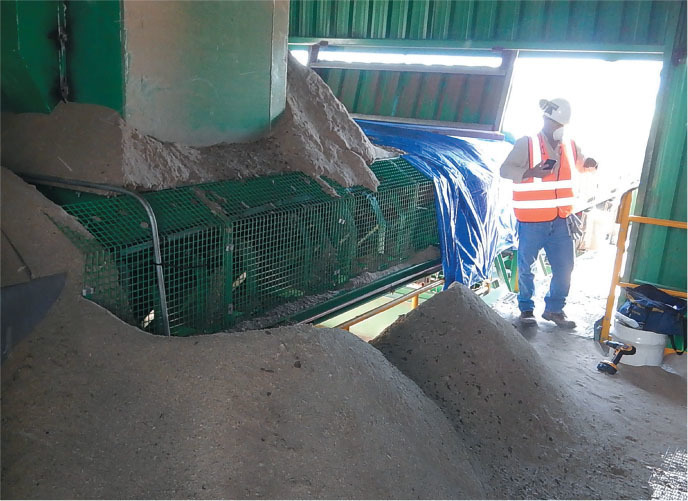

It doesn’t matter if it’s from a silo, hopper, or another conveyor, when dry bulk material is dropped onto a moving conveyor belt, dust emissions are inevitable, right?
Not necessarily.
The moving belt, even when empty, pulls air through the enclosure in the direction it is moving. When the material hits the belt, the impact causes the cargo to splash and particulates to become airborne, and the subsequent air turbulence forces the dust emissions toward the nearest opening. Without a sealed environment that controls airflow, the poor air quality creates a serious workplace safety hazard.
Dust emissions don’t only create a harmful environment for those working in the area. Abrasive particulates make their way into exposed machine parts and rolling components, causing them to wear more quickly, seize, and require replacement sooner. Dust clogs air intakes of nearby equipment and vehicles, raising the amount of downtime and maintenance. Particulates cover walkways, stairs, and control units, and obscure signage. Plus, there are serious environmental concerns and increased complaints from nearby communities that trigger inspections from authorities.
The US Occupational Safety and Health Administration (OSHA) has targeted efforts to improve air quality through greater scrutiny followed by steep fines. Regardless of operators’ opinions of these measures, they have successfully helped to reduce the number of illnesses and chronic lung diseases associated with fugitive dust emissions.
Often at issue is many operators’ lack of understanding of the underlying causes of dust. Most solutions focus on dust suppression and collection, but decades of field study and experience have shown that, to control air quality at transfer points, it is more beneficial to address the root causes by taking a holistic view of the function and design of the material transfer process.
ELEMENTS OF A TRANSFER CHUTE
A transfer chute should have several key components that mitigate material spillage and dust, allow the cargo to settle on the belt’s center, and facilitate the settling of dust either back into the cargo flow or into a dust collection mechanism. These components include cradles, wearliners, skirting, raised enclosures, and strategically placed dust curtains.
Some manufacturers offer modular transfer chute enclosures that can be quickly and economically retrofitted for changes in production during scheduled downtime. Extending the transfer chute enclosure provides more space for the turbulent air and dust to settle. Externally facing wearliners and skirting allow easy access for significantly safer maintenance. Although the normal lock-out/tag-out procedures are required, external servicing eliminates the need for chute entry and drastically reduces the amount of downtime.


NUISANCE VS. RESPIRABLE DUST
If you can see the particulates floating in the air, they aren’t small enough to be respirable, meaning they don’t surpass the body’s natural defenses and enter deep into the lung causing serious damage and health issues. Nuisance particulate matter (PM) smaller than 200μm (micrometers in diameter)—roughly the size of normal household dust—is light enough to remain airborne on ambient air currents. It settles on every surface and causes serious abrasion in rolling and mechanical components.
When PM reaches 100μm—approximately the size of a cross section of a human hair—it becomes invisible to the naked eye. At 10μm or smaller, the particulate is considered “respirable.” These particulates have become highly regulated, having been linked to chronic lung diseases some workers experience later in life. Strict regulation has drastically lowered the mortality rate.
The chute design can have a significant impact on the volume of particulate matter emitted during conveyor transfers. Chutes that are properly sealed and retrofitted with three curtain zones incrementally slow the airflow and allow dust to settle. Field tests show a drastic reduction in emissions of both nuisance and respirable dust (see Fig. 1).
IDENTIFYING THE ROOT CAUSES OF DUST
Many operators have the misperception that, in the inherently dirty businesses of manufacturing, processing, and handling bulk materials, dust control is a futile battle that can never be overcome. This is particularly true when experienced maintenance staff gaze baffled at a transfer point engulfed in dust that provides no clue as to the source of the emissions.
Air Flow through the transfer point is achieved by adjusting the loading angle and the proper placement of dust curtains. With a centered and sloped or spoon-shaped loading configuration, the cargo is eased onto the belt with less impact (and associated belt damage), no splashing, reduced air turbulence, and less shifting leading to potential mistracking. Proper placement of curtains creates zones where air flow is slowed, allowing dust to settle back into the cargo stream or be sequestered into dust collection systems (Fig. 2).
Material degradation increases small fines in two ways. As raw material is processed through crushers or mills, it is reduced in size and dust becomes more prevalent. Degradation can also be caused by the impact of material upon transfer, resulting in it breaking apart.
Poor transfer point design for current production expectations is perhaps the largest cause of dust. Conveyor systems are generally built for the production demand at the time of construction and leave little room for change. Increases in production require either a greater volume of conveyed material or higher belt speeds. Often, they result in both. If the system is not graded for these expectations, dust becomes the bellwether for a host of other issues such as reduced workplace safety, increased spillage, more frequent equipment breakdowns, and excessive downtime.
BEST PRACTICES FOR BELT CONVEYOR DUST CONTROL
Avoid belt sag: Support the belt the entire length of the chute wall (aka the “skirtboard”) so it doesn’t sag away from skirting. The pressure from air turbulence is enough to push dust and fines out of these gaps, causing excessive dust and spillage.
Wearliners increase the conveyor system’s life: Modern chute design raises the height of the chute, providing more room for dust settling in the stilling zone plus room to place the external wearliner. Without it, the rubber skirting takes the force of abrasive bulk material, which lowers the equipment’s life and requires premature replacement.
Install belt skirting to seal the environment: Single skirting should be cut to the belt’s trough angle for a tighter seal and mounted externally for easy, safe adjustment. Self-adjusting skirting has spring-driven latches that offer slight downward pressure for reduced maintenance. Dual skirting offers a single skirt with a rubber flap that provides a second layer of sealing and protection from spillage and emissions.
Seal before adding dust collection devices: “Passive dust control” uses engineered design solutions such as controlled loading, wearliners, skirting, curtains, and modular enclosures first. When there are length restrictions for chutes to allow extended stilling/settling zones, dust bags and mechanical air cleaners are highly effective. They use the airflow to direct dust toward the mechanism and, once the conveyor system stops, that collected dust is deposited back onto the belt. However, they can require more maintenance and monitoring, so sealing first will better control the cost of operation.
Slow the exiting air velocity: A flow of air is still going to be prevalent exiting the system, but the key is slowing it to under 200 fpm (1 m/s), slowing it enough to reduce emissions. Adding a tail panel and curtains is essential to this; however, just adding them at the ends does not accomplish the proper stilling environment required. Strategic placement is the key to slowing exiting air velocity.
CASE STUDY: SAN PEDRO BIOENERGY
San Pedro Bioenergy (SPBE) experienced excessive fugitive dust and spillage at three critical transfer points leading from the mulcher to the incinerator. Processed to between 1-100 mm (.04-4 in.) in size, the mulch became lighter and more prone to emit dust. Two conveyors ran horizontally from towers high above the ground, and one is inverted at a 45° angle. Transporting mulch, the 1,828 mm (72 in.) wide belts ran for 15 m (50 ft), then dropped the material 6-9 m (20-30 ft) onto unenclosed transfer chutes. The impacts created turbulent air that spread dust and spillage over a wide area, which lowered the air quality of the plant, covered walkways, and restricted access to the conveyor system.
An enclosed chute was constructed to control air flow. The technicians installed 1,524 mm (60 in.)-wide impact cradles with medium-duty impact absorbing bars. Following the impact cradles, slider cradles were set at a 35° trough angle. These ensured a proper belt seal with the skirting. The installation crew raised the transfer chute height to allow for wear liners and dual-efficiency skirting. They also capped the rear of the chute and set dust curtains along the enclosure in zones to control air turbulence.
“Less dust and spillage have made the plant a more pleasant and safer place to work,” said Ing. Luis Alberto Pantín González, general manager at SPBE. “It’s a lasting solution that’s increased uptime with significantly less maintenance.”
CLEANER, SAFER
Improving workplace air quality seems like a daunting task but eliminating it increases compliance and raises staff morale and safety. Of course, conveyor transfer points are not the only source of dust. However, as one of the most prevalent generators of particulate emissions in any bulk handling operation, it is an excellent place to start. By following best practices using modern, well-designed retrofitted components, operators can tackle dust by a process of elimination. Once large emission sources are addressed, it is easier to identify dust from other parts of the operation with the ultimate goal of a clean, efficient operation with high worker morale and an exemplary record of safety.