Going to the Moon to Grow Food with Cellulose-based Media
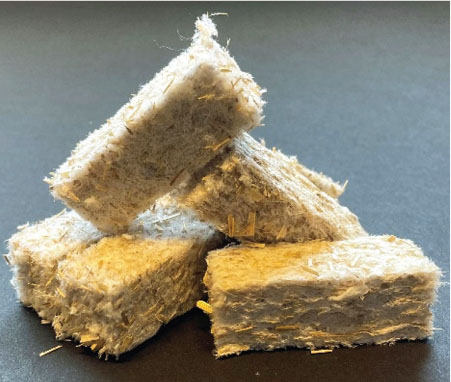
Figure 1: Cellulose cuboid prepared by foam forming. PHOTO BY GALINA SIMONSEN
Can cellulose be an important component of life … on the Moon? In recent years, there have been increasing attempts to establish a sustainable human presence on the Moon. One of the critical challenges is ensuring a reliable food supply for astronauts. With extreme temperatures, reduced gravity, and high levels of radiation, the Moon presents a harsh environment for plant growth. The absence of an atmosphere and the presence of regolith, a layer of loose fragmented material covering solid rock, further complicates agricultural efforts.
Hydroponic cultivation is one technique widely suggested for Moon applications. In horticulture, growing media provide the plant roots with water, aeration, nutrients, and mechanical support during all stages of plant growth until the harvest. Hydroponics is a type of horticulture that involves cultivation without soil. In this technique, plant roots are exposed to nutrient-rich and aerated water instead of soil. The advantage of hydroponics is that it allows for precise control over nutrient delivery and water use—a critical factor in the resource-scarce conditions of the Moon.
In hydroponic cultivation, plant roots still need a mechanical external support system that provides anchoring and stability and facilitates nutrient absorption. The selected support material also contributes to plant health and disease management, growth rate, and yield.
CELLULOSE-BASED GROWING MEDIA
Common growing media for hydroponic systems include a wide range of materials. Inert materials include mineral wool batt, sand, perlite, or pumice. Those materials do not participate in nutrient exchange; they only facilitate aeration or provide support. Organic mediums include various natural materials derived from plants or animals, such as peat moss and coconut coir. These media often offer additional nutritional value to the plants.
Many current growing media have sustainability issues. The use of peat, especially, has raised ecological concerns. Hydroponic growers need alternatives, and researchers are working to develop them.
Cellulose-based growing media are an option that offers several benefits. Cellulose is biodegradable, comes from a renewable source, and holds water. At both large and small scales, crop production usually produces side streams (such as plant stems) or byproducts (such as husks) that could be used to produce growing media. Wood fibers may also serve as a component in growing media1. Research shows that plants thrive in coarse wood fiber substrates; however, chemical wood pulps are rarely discussed as an alternative growing media.
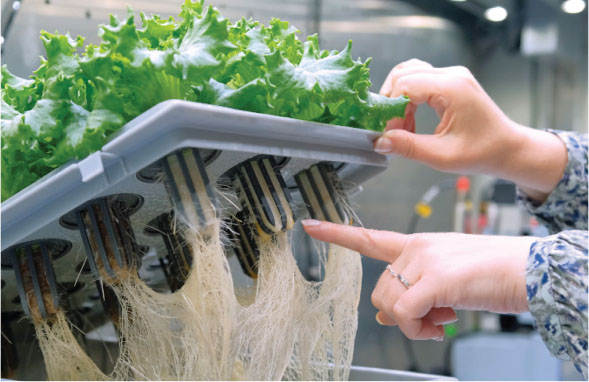
Figure 2: Hydroponic plant cultivation in cellulose cuboids. PHOTO BY JANA PAVLOVA
LUNARPLANT: A NORDIC COOPERATION
The Norwegian-Finnish joint research project LunarPlant2 is developing cellulosic growth media for hydroponic plant cultivation. The project is coordinated by the Norwegian CIRiS—Center for Interdisciplinary Research in Space. The mission of CIRiS is to perform research and development for human spaceflights.
For flights and future settlements on the Moon, explorers will need closed regenerative systems. These recycled and reused resources provide astronauts with the air that they breathe, water they drink, and food they eat. Human waste is among the resources with nutrients and water that can be reused.
Scientists regard hydroponic cultivation as a key element of these regenerative systems. In the LunarPlant project, the main research for growing media is carried out by VTT Technical Research Center of Finland and SINTEF Industry of Norway.
Research done for the LunarPlant project has taken steps forward by studying how salad and other plant species can be cultivated in cellulosic substrates in hydroponic cultivation. The researchers chose salad as the main model plant based on its relatively short growth cycle and suitability for hydroponic cultivation. The knowledge gained from these experiments could be applied to other extreme environments, such as Earth’s polar regions, or even as far as future Mars explorations.
Successful plant cultivation on the Moon could have far-reaching implications. It would not only provide a fresh food source for astronauts, but also contribute to their psychological well-being by offering a sense of normalcy and connection to Earth.
The experience gathered through LunarPlant also benefits life on Earth. Cellulosic substrates have the potential to be used in terrestrial hydroponic systems and regular cultivations in soil of, for instance, cucumbers and tomatoes. It has been estimated that the global “growing media” market is currently valued at US$4.3 billion. Approximately 67 million cubic meters of growing media are produced per year. This volume is predicted to quadruple by 2050. The growth is driven by anticipated population increases and rising living standards.
THE ROLE OF THE PULP AND PAPER INDUSTRY
There is also a connection to the earthly pulp and paper industry. Organic matter is a crucial element of healthy agricultural soils. The paper industry generates significant quantities of organic side streams that could be used to create growing media. In recent years, there has been research on the use of wood dust, bark fibers, paper waste, and de-inked paper sludge as replacements for peat in growing media3,4. The results have been encouraging. Best results are usually obtained by blending ingredients, but generally plants thrive in these media.
The requirements for industrial processes for growing media production include aspects such as relevant scale and efficiency of production, availability and versatility of possible raw materials, stable product quality, environmental friendliness, and overall economic feasibility.
Foam forming technology can fulfill these requirements5. It enables the production of low-density material structures from various fibrous or particulate raw materials. There are many ongoing actions to commercialize the foam process for different applications. Examples include foam-formed materials for acoustics solutions produced by Aisti6, insulation and packaging materials produced by Fiberwood7, and bio-based and sustainable packaging solutions by Stora Enso8.
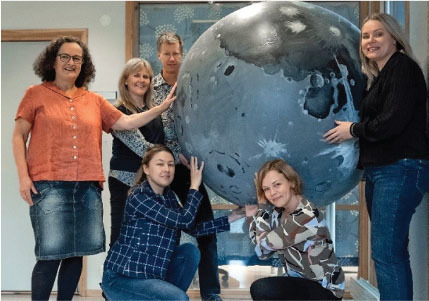
The LunarPlant project team. PHOTO BY JANA PAVLOVA
THE RESEARCH PROCESS
In LunarPlant, a Finnish team from VTT develops and produces root support growing media. The selection of raw materials is determined by the choice of plant species that could potentially be grown on the Moon. Selected raw materials and additives, such as a wet strength agent, are added into water, together with a surface-active agent. With mechanical mixing, researchers generate a foam with an air content of 60 percent. The wet foam is then poured into a mold and dried.
The dried fibrous sheets, which have a density of 50–130 kg/m3, are cut into cuboids (see Fig. 1) and sent for plant cultivation tests to Norway. Norwegian researchers from CIRiS and SINTEF Industry are cultivating selected plant species in the produced foam-formed cuboids (Fig. 2), which are placed into specialized growth chambers intended for hydroponic cultivation9.
The initial experiments show promising results. The salad plants demonstrated an ability to grow and thrive in cellulosic media under controlled growth conditions. This innovative media not only provides adequate structural support for plant roots, but also maintains the necessary water retention and aeration needed for healthy plant growth.
FUTURE DIRECTIONS
The LunarPlant partners wish to invite industrial and research collaborators to build new projects around this fascinating topic of sustainable growing media. The research and development would focus on widening the raw material base, techniques to manufacturing of the growing media, optimizing growth conditions, and developing sustainable systems for waste recycling and water management.
For the pulp and paper industry, sustainable growing media production could offer new business opportunities—at least here on Earth, where urban agriculture and vertical farming are expanding at a fast pace!