From Nuclear Tech to Tissue Exec: An Interview with Vince Reese, Cardinal Tissue
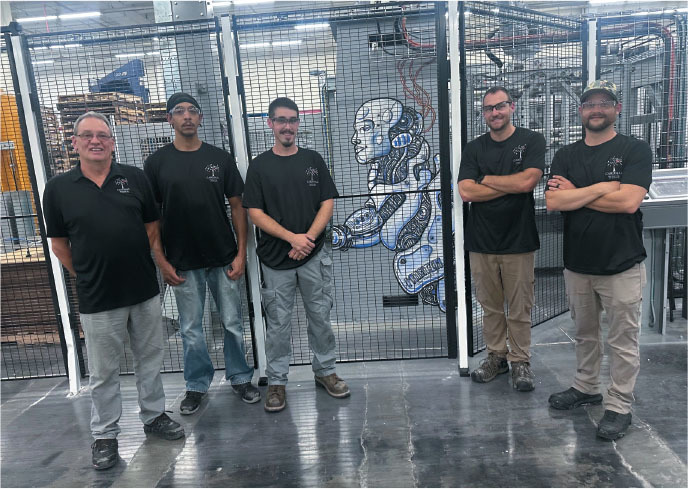
At Cardinal Tissue, employees are not merely hired hands—founder and CEO Vince Reese calls them “the heart of our company.” Since its founding in 2017, Reese has envisioned Cardinal not only as the manufacturer of world-class tissue products (including toilet paper, paper towels, napkins, and facial tissue), but a place where people could grow their skills.
Today, Cardinal Tissue is a best-in-class tissue manufacturer that provides national brand equivalent tissue products for private label retailers. The company thrives on the ideas and ingenuity of employees at every level. It’s part of the company culture, says Reese: “Our entire team is passionate about the work that they do for the tissue industry, and their creative and collaborative spirit is truly palpable.”
Paper360° asked Reese to share his journey from Navy vet into the paper industry—and what he has learned about workforce development as a successful, employee-focused business owner who is passionate about our industry and its potential to provide satisfying careers.
Paper360°: Please tell us a little about your service in the Navy, and the skills you developed as a nuclear technician.
Reese: I served in the Navy from 1982 to 1990. As my high school graduation loomed, it was stressful for me not knowing what I was going to do with my life. We didn’t have a lot of money and the prospect of spending any of it to figure that out while in college only added to the pressure. I researched the services and programs in each branch and learned that the Navy had a Nuclear Power program with one of the most intensive training programs that I could find. Once I made that decision, a weight was lifted.
It didn’t take me long to realize this was very different than anything I’d done before. There were no good options for failure. If you could not keep up with the curriculum you were dropped and where you might land would not be in your hands. Certainly, recruits needed to have some aptitude for STEM topics, but more than that we needed an intense adversity to failure and a willingness to work however hard it took to not just pass, but to excel. Those that made it through the program were proficient at learning.
Later in life, it’s been remarkable looking back at how a program could take an inexperienced kid and, in a fairly short period of time, turn them loose on a nuclear reactor.
One tool the Navy used was a qualification document. This is a check-off list that includes the systems we needed to learn and the practical exercises we needed to demonstrate. The folks that verified the trainee’s knowledge or proficiency of a system or task were those that were already qualified to do those things. This concept has been the foundational structure of training programs that I’ve helped to develop at various stages in my career.
What was your path like from the service into your manufacturing career? Looking back, were there any hurdles or opportunities that stand out?
When I was considering leaving the Navy, PLCs were starting to become a necessity in industry. Relay logic was being replaced by computers. At that time in the nuclear Navy, which was all about reliability, there was little use of computers for the control of machinery. This technology was changing very, very quickly; I wanted to find a place to learn about it. Around that time, I heard about a modernization project going on at a large pulp and paper company that was implementing a lot of this type of equipment.
Reliability trumps everything else in the nuclear field. Mistakes or failures can have particularly nasty consequences. For companies, avoiding mistakes and failures are important, but also there must be some consideration for economics. This is true for training as well.
Do you think your military service helped prepare you for a job in manufacturing? Have you seen that veterans have skills or talents that serve them well on the job?
Certainly. Still, the specific knowledge obtained from your Military Occupational Specialty (MOS) in the service isn’t as relative to your opportunities as the proven demonstration of the ability to learn and the discipline needed to complete your objectives.
There is a motivational poster in my office with a quote from Theodore Roosevelt: “The one quality which sets one man apart from another—the key which lifts one to every aspiration while others are caught up in the mire of mediocrity—is not talent, education, nor intellectual brightness. It is self-discipline. With self-discipline all things are possible. Without it even the simplest goals can seem like the impossible dream.” You get that in the military, as a bonus.
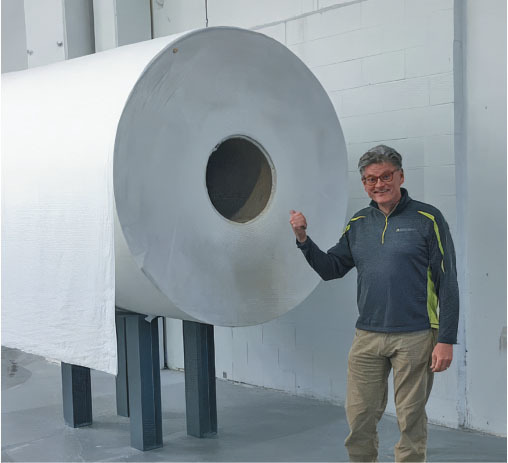
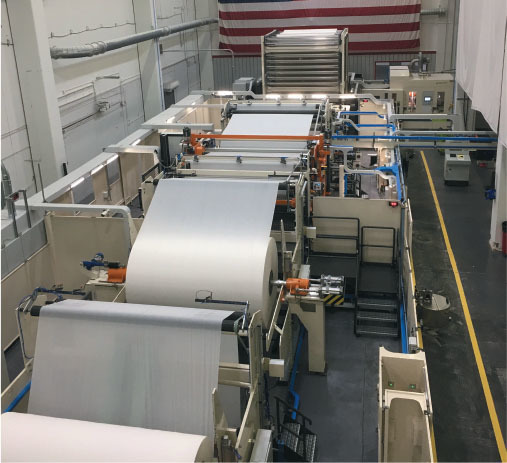
What made you decide to start Cardinal Tissue? What do you think makes your company special?
More than anything I wanted to know if I could or not!
We have a good group of people that I’m very proud of. They are good at what they do, and it’s been fun watching folks grow professionally as the company grows. That is special.
What are your biggest challenges in attracting and keeping the best workers?
A common complaint from employers is that “today’s generation” doesn’t have the work ethic that they had when they were that age. I’ve heard that about the last three generations now and I’m pretty sure that was said 50 years ago too.
We live in an instant gratification world. If you order a hamburger and it isn’t ready when you get to the window, that is poor service. I think time is the challenge. How to find the time to spend enough of it on those things that develop people, while still being able to get the hamburgers out the window.
What are some of the most effective things you do at Cardinal to train and educate workers?
We use a qualification card document—that’s effective. It is also important to help folks understand the business and the direct impact their work has on the results.
Communication is key. We want to make sure that everyone knows what we are working on and what our goals are every day. People must learn teamwork; you don’t just have that by default. What that looks like can be different for different jobs.
It’s been my long-term goal to develop a program to help provide qualified potential candidates for jobs within our industry. My vision is more of a certification process that captures the key hard skills and soft skills needed to be successful in manufacturing.
I’ve seen several iterations of this concept over the years. Most of these were focused on soft skills and some general requirements for manufacturing, such as the OSHA 10 training program. I think this approach is lacking in a few key areas.
For one, there is too little exposure to actual hands-on manufacturing, and to feedback from someone actually doing the job for a living. This approach requires a manufacturer that is willing to open its facility to production students who, when trained, may go to work at a different facility—perhaps even a competitor’s facility.
The basic concept is akin to a trade school—such as lineman school—where folks may enroll from any part of the country to receive concentrated training over 12-16 weeks, then receive placement assistance with a company looking for those skills. Based on attrition rates of 10 to 20 percent, which are conservatively low, you could potentially place more than 100 production students a year into these seed positions in facilities like ours.
What role do you see for community colleges in helping solve workforce issues? How might mill owners work with local colleges or training schools to help ensure a ready workforce?
Colleges, community and otherwise, are essentially for-profit operations. This has been a barrier to establishing sustainable, long-term programs. I’ve had experience with several community colleges that do a decent job assisting manufacturers with project-based workforce training. These can be funded in part with grants that allow for this kind of activity.
The iteration I’m envisioning is fundamentally different in that it would service needs for multiple companies within the same general industry across county and state lines. This nut will be cracked; it will just take concentrated focus and coordination to get some legs under it.
If you could tell a young person, a veteran, or any other job seeker one thing about a career in pulp, paper, tissue, or packaging, what would you tell them?
I would tell them to think long-term. If they are looking for a career, not just a job, then doing something in manufacturing where you are making a product people use and need every day is an excellent choice. Technology is changing rapidly and is born in manufacturing.
I would also encourage them to work and go to school while they work. They can avoid debt by earning a wage. Opportunities didn’t exist 30 years ago as they do today. Everybody doesn’t get a trophy in life; if you want something, develop the self-discipline to do it.