
Intelligent Safety
As part of a research effort to better understand the impact of traditional safety data collection practices, I discovered that human biases, human error, and the lack of comprehensive data were driving decisions that often provided a superficial solution to a far more complex problem. Leveraging technology and real-time data collection can significantly improve safety outcomes.
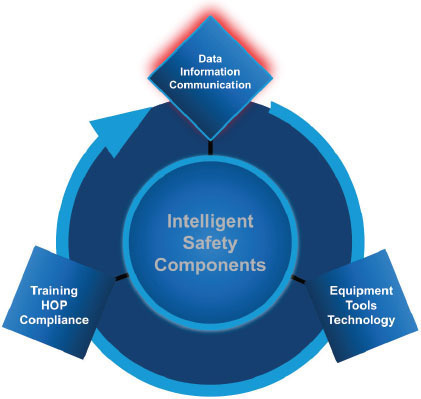
Workplace safety is critical for any pulp and paper mill as it seeks to protect the well-being of employees and the smooth operation of business activities. A balanced safety program encompasses a range of practices, policies, and equipment designed to prevent accidents, injuries, and illnesses in the paper mill. It should also include an Intelligent Safety system.
WHAT IS INTELLIGENT SAFETY?
Intelligent Safety (IS) refers to an advanced, technology-driven approach to identify risks in the industrial workplace. By applying intelligent technologies, a facility can gain near real-time information about the state of its occupational and operational safety.
IS enhances a mill’s safety culture by giving stakeholders real-time data that enables them to make informed decisions and take immediate action when necessary. By implementing IS, pulp and paper manufacturers can continuously monitor and analyze safety data in real-time, identify potential hazards, and implement preventive measures before incidents occur.
Not only does IS protect employees and assets, but it also contributes to the overall efficiency and profitability of a site.
CHARACTERISTICS OF AN EFFECTIVE IS SYSTEM
While IS systems often feature technologies such as artificial intelligence (AI), the industrial internet of things (IIoT), machine learning (ML), and image recognition, it’s important to remember that these technologies are not the IS system.
Simply put, an IS system encompasses two distinct components: technology and actionable insights. An effective IS system provides six autonomous capabilities:
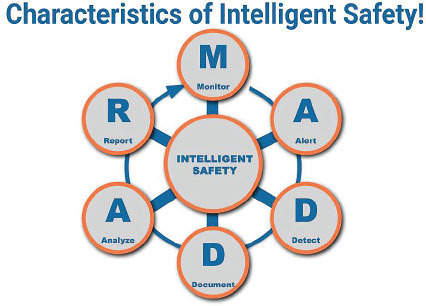
- Monitor your operation continuously with the capability of identifying bothoperational and occupational safety risks as they occur.
- Detect and risk-assess violations as they occur.
- Alert stakeholders of the risks that are occurring in real and near real-time.
- Document risks as they occur based on the organization’s determined risk tolerance.
- Report observed risks on-demand.
- Analyze the data gathered from the observed risks.
By delivering on these six capabilities, an effective IS system offers an organization all the necessary information it needs to understand the state of its safety in real-time.
ACHIEVING SAFETY GOALS WITH IS
In manufacturing, safety failures can be unforgiving. This is why many safety initiatives have the word “zero” in their name. We strive for zero accidents, zero incidents, zero harmful situations. IS can help sites deliver on their safety goals to achieve “zero.”
By incorporating an IS system into its safety program, a mill or plant can leverage AI, IIoT, and other big data technologies to create safer working environments, reduce the risk of accidents, and ensure the well-being of their employees.
For example, an IS system can integrate IIoT with devices such as sensors and AI-powered cameras to monitor real-time environmental conditions—such as active redzones, safety behavior, temperature, humidity, and air quality. Using ML algorithms, anomalies can be identified, and hazard predictions can be made to allow predictive intervention. In other words, an effective IS system can enable the detection of an unsafe process before a safety failure.
Intelligent Safety is not the stuff of science fiction. Paper mills are using IS today to implement exceptional safety programs that strive to bring every employee home safe, every day.