Right-Sizing Your Maintenance Organization
One of the most common questions I am asked, especially from those who are new to maintenance, is “How do I know that we are right-sized within our maintenance organization?”
Many have tried to find a simple answer to this question. I have collected large amounts of data to find this answer—for example, number of motor drives, pumps, or other common equipment within respective industries, in relation to the size of the maintenance workforce. Figure 1 shows some steps that can help.
Some believe that maintenance size should be based on estimated replacement value. It is common to say that maintenance costs should be less than two percent of estimated replacement value and the cost of employees is then a percentage of that cost, often 30 to 60 percent, depending on where in the world the facility is located.
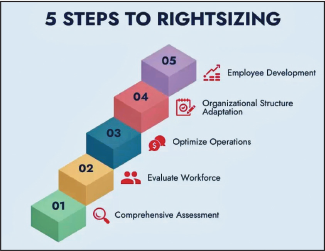 Figure 1: Five Steps to Maintenance Rightsizing IMAGE COURTESY TEAMFLECT
This is, of course, very difficult to determine because it is difficult to assess the replacement value of older facilities. In addition, maintenance costs vary in each facility, even within the same company.
Many of these costs depend on how rules are applied. For example, in some companies, lubrication is seen as an operating cost and in other companies as a maintenance cost.
The same thing goes for the replacement of machine clothing, refiner plates, etc. One of the biggest variations includes the application of rules for what can be defined as “maintenance cost versus capital cost.” The variation here can be very big.
A few years ago, I worked with two competing paper companies. One company had maintenance costs of about US$55 per ton; the other had maintenance costs of US $120 per ton. The cost of manufacturing was about the same for both companies. The company with the lower maintenance costs later purchased the other company. Subsequently the acquired company adjusted the rules of capitalization, and their maintenance costs ended up at the same level. Maybe the acquired company capitalized as much as possible because they knew they could be bought?
Mark Twain insisted that there are three types of lies: “lies, damned lies, and statistics.” Even so, we have often successfully applied statistics in order to discover the correct sizing of a maintenance organization.
 Figure 2: The result of “short-term savings preceding long-term common sense.”
Figure 2 shows an example from a maintenance organization with 30 hourly employees. In year two they cut down the maintenance force from 30 to 25 people. Since nothing was done to improve maintenance processes, the obvious result was extra hours in overtime, plus contractor hours increased more and more from years 2-6.
During years four, five and six, there was still a strong product demand at the same time as production reliability went down. I see similar examples over and over again. Short-term savings precede long-term common sense.
Total hours have gone up from 70,900 to 89,196. The key here is to not analyze the number of employed people, but rather look at all the maintenance hours and how they are distributed within total paid hours.
In this case, the mill calculated that a realistic efficiency improvement of 15 percent could be achieved through the process improvement initiatives that were necessary to implement. This means that the mill will need only 76,000 maintenance hours in the future (down from the 89,196 needed in year six).
The implementation of improvements and results are expected to increase gradually within a period of four years. The natural attrition during these years is five people, or 10,400 paid hours.
Overtime and purchased services will return to a normal level of 10 percent each. This means that the correct number of hours for a maintenance department is calculated to 60,800 or 29 employees. This will lead to four people being recruited within four years.
By implementing and performing better and better maintenance processes, the maintenance department will reach the right capacity in the future. This is the only proven way to find the right level of maintenance size.
IDCON R&M Tip: Small Jobs in Maintenance
Every maintenance professional should strive to rise above reactivity. Effective planning and scheduling are critical components to rising out of reactivity aka “The Circle of Despair.” If you are reading this, you probably already know why maintenance planning is important. This article is about small jobs in maintenance that need limited or no formal planning.
One struggle that comes with being reactive is an ever-growing backlog. You try to do the right things right and plan every job, but you often think “how will I ever plan it all?” The good, and possibly surprising, news is … you don’t need to! There are certain maintenance jobs where the formal planning process isn’t necessary because it’s just overkill and not cost effective.
This a maintenance job category known as “small jobs” that meet four criteria (below). Small jobs do not need to go through the formal planning process. However, some controls must be followed to prevent this job category from being abused.
What are the criteria for small jobs?
Four criteria signify a maintenance task can be categorized as a “small job.” These are not hard and fast rules—just examples. You should tailor your criteria to best meet your mill’s needs. One important thing to note is that the criteria you choose must be documented and communicated for them to be effective (and to not complicate things down the line.) The four criteria are:
- Requires no more than two human hours to complete.
- Parts and materials cost less than US$200.
- The job does not require a shutdown.
- The job does not involve the modification of any equipment or process.
Management process for small jobs in maintenance
Who is responsible for managing small jobs? The short answer is “the maintenance supervisor.” A crew member identifies a needed repair that meets the small job criteria. Depending on your organization, the requestor should notify the maintenance supervisor of the maintenance deficiency.
After being notified of the work request, the maintenance supervisor assesses the urgency and scope of the job (or may assign a tradesperson to do this assessment in his or her place). If the job does meet the small jobs criteria, the maintenance supervisor assigns a tradesperson and schedules the job in a way that is compatible with the weekly or daily maintenance schedule.
The costs and labor hours associated with the job should be applied to a standing work order that is assigned to a specific equipment or asset number instead of creating a unique work order. Note: small jobs should not be considered break-in jobs, and experienced planners know to leave some flexibility within the schedule to allow for the small jobs that come up.
The next step is to perform the work. If something happens during the job that is going to cause the job duration to exceed two hours or cost more than US$200, return everything to a safe and as-functional-aspossible-state and notify the maintenance supervisor that a formal work order will need to be created. The tradesperson will then record the data for the portion of work performed into the work history of the standing work order so that the integrity of the asset history can be preserved and KPIs can be calculated.
Final thoughts on small jobs
To recap, some key differences between small job management and the formal planning process are:
- Managed by the maintenance supervisor instead of planner.
- A standing work order is used instead of creating a new work order.
- The job is scheduled by the maintenance supervisor rather than the scheduler.
- There are controls unique to small job management that are not part of the formal planning process.
- There are also KPIs that only apply to small jobs.